Reverse osmosis (RO) is a widely used water purification technology capable of effectively filtering a wide range of contaminants using a semi-permeable membrane. This technology ensures that the water consumed is clean, clear, and free of harmful substances. Thanks to its efficiency and performance, RO has become a cornerstone of modern water treatment solutions.
1. What is reverse osmosis?
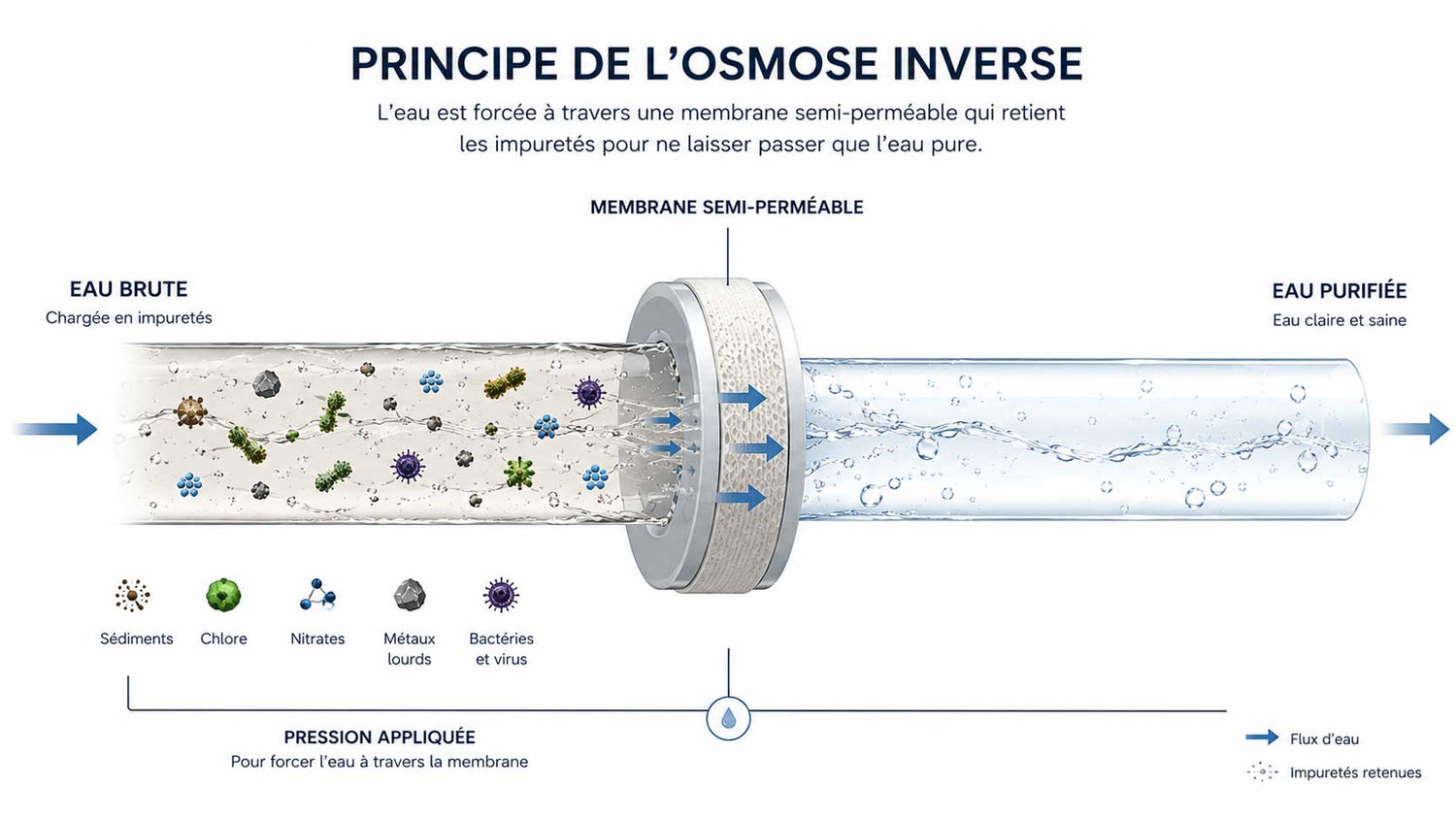
Reverse osmosis involves forcing water through a semi-permeable membrane under pressure. This membrane is designed to allow water molecules to pass through while blocking larger molecules and contaminants, including:
- Bacteria and viruses: Disease-causing microorganisms are effectively reduced, minimizing health risks.
- Chemical pollutants: This includes industrial chemicals, heavy metals, nitrates, fluoride, PFAS, pesticides, and pharmaceutical residues that may be present in water.
- Salts and minerals: Dissolved in water, they contribute to hardness and scale buildup in pipes and appliances.
The pores of a quality membrane measure approximately 0.0001 micron, or one millionth of a millimeter (for comparison, bacteria measure between 0.2 and 1 micron, viruses between 0.02 and 0.4 micron, and PFAS approximately 0.0005 micron).
| Contaminant | Approximate size | Osmosis filtration efficiency |
|---|---|---|
| Sand, rust | 10 – 100 µm | 100% |
| Fine sediments | 1 – 10 µm | 100% |
| Bacteria | 0.2 – 1 µm | 99% |
| Viruses | 0.02 – 0.1 µm | 99% |
| Pesticides & Herbicides | 0.001 – 0.005 µm | 97 – 99% |
| Hormones & pharmaceutical residues | 0.0005 – 0.005 µm | 95 – 99% |
| PFAS (perfluorinated substances) | 0.001 – 0.005 µm | 94 – 99% |
| Dissolved heavy metals | < 0.001 µm | 95 – 99% |
| Dissolved salts (Na+, Cl-) | < 0.001 µm | 95 – 99% |
| Nitrates & Nitrites | < 0.001 µm | 85 – 95% |
2. Why is it called "reverse osmosis"?
The term "osmosis" refers to the natural movement of water molecules from an area of low solute concentration to an area of high solute concentration, across a semi-permeable membrane. This process aims to balance the concentrations on both sides of the membrane.
"Reverse osmosis" reverses this natural process. By applying external pressure, water is forced from an area of high solute concentration (contaminated water) to an area of low concentration (pure water), effectively separating contaminants from the water.
Want to choose the right reverse osmosis system for your home? Discover our 6-question guide or directly explore our AquaCycle reverse osmosis systems.