


Tap water, bottled water, reverse osmosis water... and now hydrogen-rich water? "Water vitalization" is attracting more and more attention. Here's what science says about it.
1. Oxidative Stress: Antioxidants Versus Free Radicals
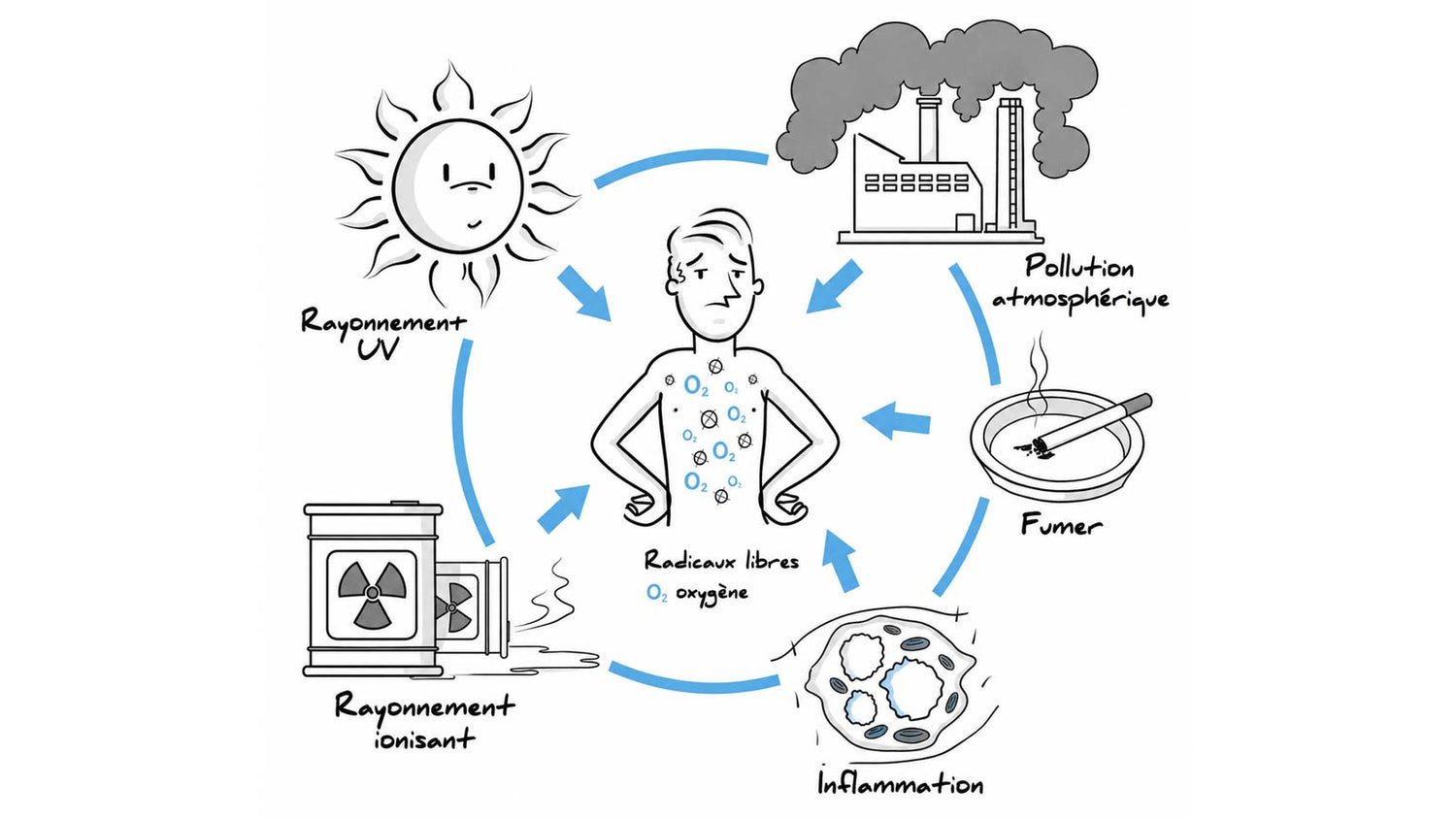
Free radicals are formed during normal metabolic processes, but their production can be amplified by exposure to ultraviolet rays, pollution, smoking, or stress. These unstable molecules seek to compensate for their electron deficit by stealing them from other molecules.
In excess, they cause oxidative stress, which can damage essential cellular components: proteins, lipids, and DNA.
The body neutralizes these effects via antioxidants, which neutralize free radicals by donating an electron to them. Maintaining the balance between free radicals and antioxidants is fundamental for health.
2. Sources of Antioxidants: The Body, Food, and Water
The body naturally produces its own antioxidants and supplements them through food and water.
Dietary antioxidants: Vitamins C and E, selenium, and beta-carotene are present in many fruits and vegetables.
Antioxidants in hydrogen-rich water: Hydrogen-rich water is enriched with molecular hydrogen (H₂), a gas with antioxidant properties. Unlike dietary antioxidants, molecular hydrogen acts by reacting directly with hydroxyl radicals to form water—without generating by-products.
3. Water Vitalization with Hydrogen
AquaCycle has opted for vitalization with molecular hydrogen via electrolysis. This process, also called hydrogenation or ionization, works by applying a low-intensity electric current that separates hydrogen and oxygen atoms.
A key indicator is the ORP (Oxidation-Reduction Potential): the higher the value, the more oxidizing the environment. A negative value indicates an antioxidant environment—which is the goal of hydrogen-rich water.
4. How Much Hydrogen-Rich Water Should You Drink Per Day?
Researchers recommend 1 to 2 mg/day, which corresponds to 1 to 2 liters of water per day with a dissolved hydrogen concentration of 1.0 ppm, preferably consumed on an empty stomach and between meals.
The consumption of hydrogen-rich water is generally considered safe, and no significant side effects have been reported to date. Hydrogen is rapidly eliminated from the body through respiration or urine.
Note: The long-term effects of regular consumption of hydrogen-rich water have not yet been sufficiently studied.
5. Practical Uses
Rinsing food
Washing your fruits and vegetables with hydrogen-rich water is an excellent way to extract traces of pesticides and herbicides.
Skin care
Hydrogen-rich water has several properties for the skin:
- Hydration: Its small molecular size allows it to penetrate to the core of cells.
- Antioxidant: Protects the skin from oxidative stress.
- Anti-aging: Helps to tone the skin and reduce wrinkle formation.
- Soothing: Anti-inflammatory properties useful for imperfections.
6. The Water Vitalizer: Your Reverse Osmosis System's Ally
If your lifestyle exposes you to oxidative stress—pollution, tobacco, alcohol, unbalanced diet, intense physical activity, stress—and your consumption of fruits and vegetables is insufficient, a water vitalizer can be a valuable ally.
For optimal quality hydration, combining a reverse osmosis system and a vitalizer provides water that is both pure and enriched with molecular hydrogen.
Discover our filtration solutions or find the model suited to your situation.