QUESTION 3: How many filtration steps are required?
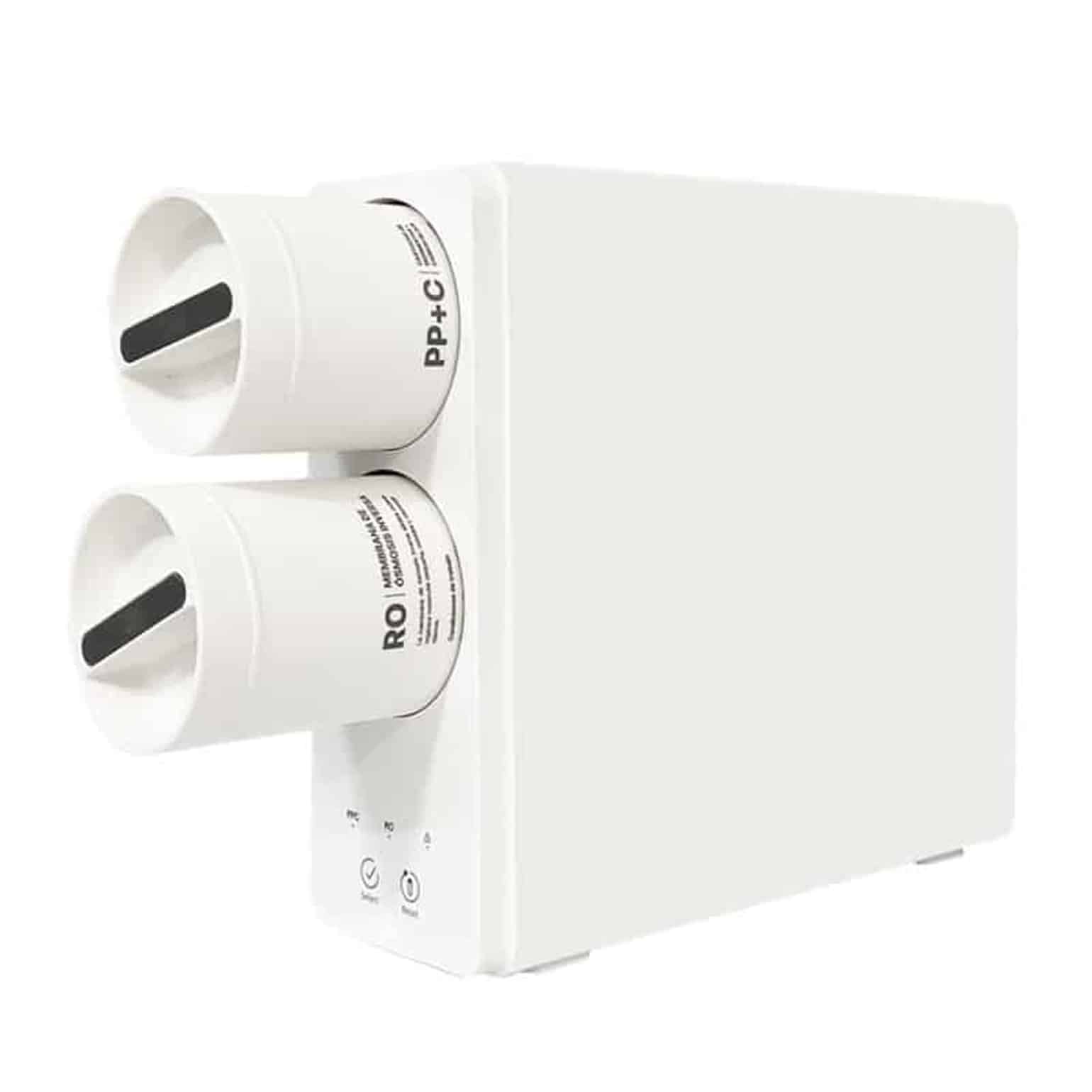
Reverse osmosis systems often vary from 3 to 8 filtration stages. Some of these stages come before the osmotic membrane (pre-filters), others after (post-filters).
Below is a summary table:
Potential stages (#)
1
2
3
4
Type
Pre-filter
Pre-filter
Pre-filter
Osmosis
Name
PP - 100% Polypropylene
GAC - Charcoal granules
CTO - Compact coal
Osmotic membrane
Filtration efficiency
5 microns (µm)
1 micron (µm)
0.5 microns (µm)
0.0001 microns (µm)
Filtered elements
Sand, rust, fine sediments
Fine sediment
Bacteria
Bacteria, virusses, dissolved heavy metals, pesticides, PFAS, nitrates,
Potential stages (#)
5
6
7
8
Type
Post-filter
Supplement
Supplement
Supplement
Name
Activated carbon
Remineralization
UV lamp
Alkaline filter
Filtration efficiency
Taste & smell
Bioavailable mineral supplements: Magnesium, calcium, potassium
Viruses & bacteria
Increases water PH from (PH <7) to (8<PH <10)
Filtered elements
Tastes and odors that may be due to stagnation in the reservoir
NA
Living elements. Relevant after stagnation in reservoir
NA
Board More steps doesn't necessarily mean better results. However, more stages means more maintenance and therefore higher costs. That's why Aquacycle's selection focuses on simple, accessible models that concentrate on the efficiency of reverse osmosis.
QUESTION 4: How difficult is maintenance?
Models :
Direct feedMaintenance: super-simple, since they feature bayonet filters that can be changed in less than 2 minutes (even for the least DIY-minded among us). The LED system automatically tells you when the filters need changing.
With tankMaintenance: maintenance is not complicated, but requires a basic understanding of how the osmosis unit works, and a DIY approach. Requires 1 to 2 hours per year.
Frequency :
Pre-filters :
Less expensive
12-month maintenance
Osmotic membrane :
More expensive
Maintenance 24-36 months
Post-filters :
Less expensive
12-month maintenance
Advice By choosing Aquacycle, the maintenance date of your osmosis unit will be recorded in our system, and we'll be sure to follow up automatically when your filters need replacing.
QUESTION 5: What is the water discharge from my osmosis unit?
An osmotic membrane rinses to remove filtered contaminants. An osmosis plant therefore systematically rejects a quantity of water for every liter of water filtered. The ratio of pure water to rejected water depends mainly on two factors:
Inlet water pressure Models without electricity are resilient, but depend entirely on circuit pressure. Below 3 bars, efficiency drops and the portion of water rejected increases considerably. Electrified models, on the other hand, are fitted with a pump to achieve the pressure required for ideal efficiency.
Osmotic membrane sizeThe larger the membrane, the higher the flow rate and the lower the discharge.
Board If you're concerned about the environment, this is an important factor to consider. Please note that the pump and membrane size are the two major factors influencing the price of an osmosis unit. A low-discharge (and often high-flow) osmosis plant will therefore often be more expensive.
QUESTION 6: What is the total cost of my osmosis unit?
When considering the purchase of an osmosis plant, it's important to take into account not only the initial investment, but also the costs associated with maintenance.
Direct-flow reverse osmosis systems have filters that cost more, but require no technical knowledge to replace. So if you're not a DIY enthusiast, you can do it yourself and avoid the expense of a specialist.
Board It's interesting to see the cost of an osmosis unit per liter of water consumed. The cost of a liter of filtered water is bound to be higher than a liter of tap water, but you'll soon realize that it's much cheaper than bottled water (not to mention the convenience and the plastic bottles saved for the environment).
Conclusion
A well-chosen reverse osmosis system can considerably improve the quality of your water and, by extension, your health. If this 6-question guide doesn't answer all your questions, please don't hesitate to contact us. contact.